How Much Does a Barbell Weigh? Full Guide
A standard Olympic barbell weighs 20 kg (45 lb) - but not every bar in your gym weighs the same. Here is every bar type, how to count your total lift correctly, and why the weight matters more than you think.
Get your free AI training and nutrition plan in 60 seconds
How Much Does a Barbell Weigh? The Direct Answer
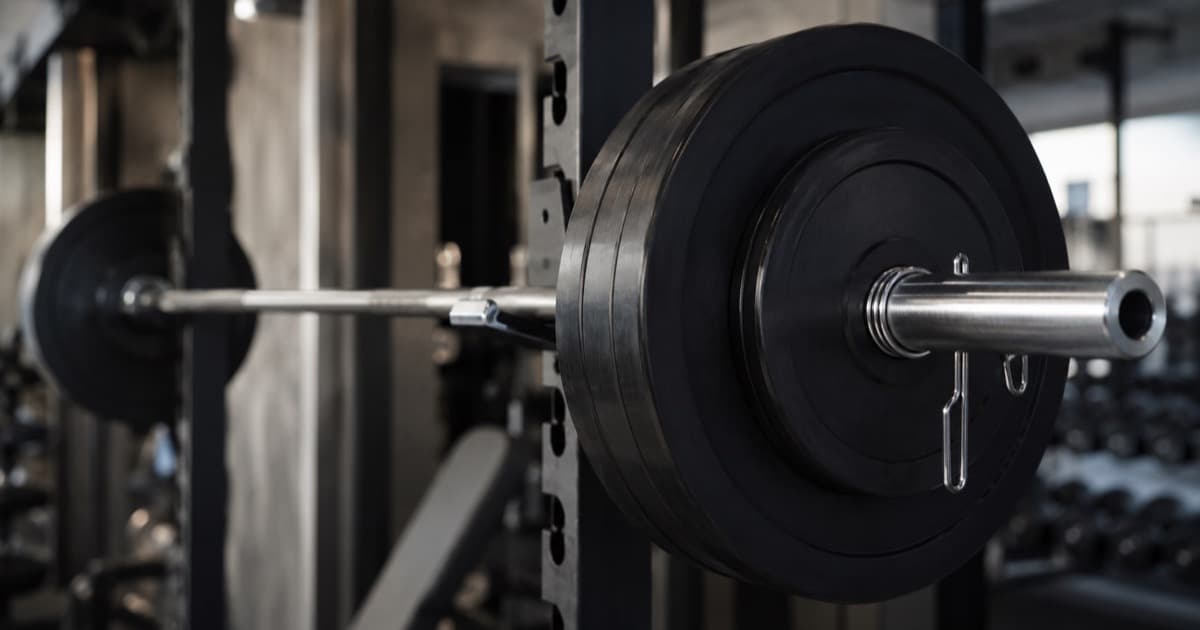
A standard Olympic barbell weighs 20 kg (45 lb) and is roughly 2.2 meters long. That is the bar you will find on the bench press, in the squat rack, and on the deadlift platform in almost every serious gym worldwide. The barbell weight always counts toward your total lift - so if you have 20 kg of plates loaded per side, you are lifting 60 kg, not 40.
Not every bar in the gym weighs 20 kg, though, and that difference matters. Counting the wrong bar weight can throw off your logged progress by 5 to 15 kg per session. Here is a complete breakdown of every bar type and how to always calculate your real numbers.
Barbell Types and Their Weights
The weight of a barbell varies significantly depending on its type and purpose. Before you log a lift, it helps to know exactly which bar you picked up.
- Olympic barbell (men's): 20 kg (45 lb), length roughly 2.2 m, shaft diameter 28-29 mm. The universal standard for bench press, squat, and deadlift in commercial gyms and competitions.
- Olympic barbell (women's): 15 kg (33 lb), slightly shorter with a thinner 25 mm shaft. The women's Olympic bar is lighter and easier to grip for people with smaller hands, and is the standard used in women's Olympic weightlifting.
- Dedicated squat bar: some gyms stock a heavier squat bar, typically around 25 kg, with a thicker shaft and more aggressive center knurling to stay put on your traps during heavy back squats. It looks similar to a standard bar, so always check the label.
- Standard (home) barbell: usually 8 to 12 kg, thinner and shorter, made for plates with a 25-30 mm hole rather than the 50 mm Olympic hole. Very common in home gyms and budget setups.
- EZ curl bar: typically 5 to 10 kg, with a W-shaped shaft that reduces wrist strain on curls and skull crushers.
- Trap (hex) bar: usually 20 to 25 kg, used mainly for deadlifts and farmer carries. The hexagonal frame lets you stand inside the load, which shifts the stress away from the lower back compared with a straight bar.
- Safety squat bar: typically 25 to 32 kg, with camber and handles that move the load slightly forward. Useful for people with shoulder mobility issues. Because these bars are heavier than a standard Olympic bar, the weight matters - always check before comparing numbers.
If you are unsure which bar you have in your hands, look for a weight label stamped near the sleeve, or ask the gym staff. A difference of 10 kg between bars is not trivial when you are tracking progressive overload.
How to Calculate the Total Weight on the Bar
The formula never changes, regardless of which bar you use:
Total weight = bar weight + (plates on one side x 2)
Because plates go on both sides, you count them twice. A fast mental method: add up the plates on one side only, double that number, then add the bar weight. Here is how that looks in practice:
- One side has a 20 kg plate and a 5 kg plate: 25 kg on one side, 50 kg across both sides.
- Add the Olympic bar: 50 + 20 = 70 kg total.
Do the same calculation in pounds and the logic is identical - 45 lb bar plus plates on both sides. The only thing that changes is the unit.
Worked Examples: Kilograms and Pounds
- Empty Olympic bar: 20 kg / 45 lb
- Bar + 10 kg (22 lb) per side: 40 kg / 89 lb
- Bar + one 20 kg (45 lb) plate per side: 60 kg / 135 lb - the classic "one plate" bench
- Bar + 20 kg and 10 kg per side: 80 kg / 176 lb
- Bar + two 20 kg (45 lb) plates per side: 100 kg / 225 lb - the "two plate" bench
- Bar + 20, 10, and 5 kg per side: 110 kg / 243 lb
These milestones - "one plate," "two plates" - are how lifters in most gyms communicate how much they lift without specifying every plate on the bar. Knowing the barbell weight underneath those shorthand labels is what lets you understand the real number.
Pounds vs Kilograms: Same Standard, Different Units
In gyms that use pounds, the men's Olympic bar is made to 45 lb and the women's bar to 35 lb. Common plate denominations are 45, 35, 25, 10, 5, and 2.5 lb. The math works exactly the same way - the only thing that is different is the unit stamped on the equipment.
If you ever switch between a kilogram gym and a pound gym, convert your target total weight once before you start loading (1 kg equals roughly 2.2 lb), then load to that number. Trying to convert plate by plate in your head mid-workout creates errors and wastes time. Keep your training log in one unit consistently so your numbers stay comparable over time.
Why the Barbell Weight Matters for Your Progress
Knowing the exact weight on the bar is not a technicality - it is the foundation of progressive overload. Progressive overload means lifting a little more over time, whether that is heavier weight, more reps, or more sets. If you are not counting the barbell itself, you might think you lifted 40 kg when you actually lifted 60 kg, and your training log becomes unreliable. You cannot progressively overload a number you do not track accurately.
This is especially relevant when you move between gyms or borrow different bars. A session on a 25 kg safety squat bar is measurably heavier than the same plates on a 20 kg straight bar. Logging the correct total each time is what lets your data guide you toward real progress rather than guesswork.
Trainera.fit includes a workout logger where you record the bar type and total weight for every set, so your progress chart reflects exactly what you lifted - no more confusion when you switch equipment or try to remember what you did three weeks ago.
How Much Should a Beginner Lift?
Starting with the empty 20 kg Olympic bar is completely appropriate, and for some exercises - like the overhead press or Romanian deadlift - it can be a genuine challenge. Women, younger lifters, and anyone returning after a long break often start with the 15 kg women's bar or a 10 kg technique bar. There is nothing wrong with going lighter; technique requires focused effort, and that effort is harder when you are also struggling with the load.
The standard progression for beginners looks like this: master the movement with the empty bar or a light bar, then add the smallest plates available (usually 1.25 or 2.5 kg per side) each session or every few sessions. Small, consistent jumps across many weeks compound into significant strength gains. Jumping to a heavier load before your technique is solid almost always means a slower overall result, not a faster one.
If you are unsure where to start or how fast to add weight, working with a certified personal trainer takes the guesswork out of those decisions. The trainer marketplace on Trainera.fit lets you filter coaches by specialty, location, and availability so you can find someone who matches your exact situation.
The Most Common Barbell Weight Counting Mistakes
Forgetting to Count the Bar
Loading 10 kg per side and logging "20 kg" - when the actual total is 40 kg with the bar included. Always count the barbell weight first, then add the plates.
Counting Only One Side of Plates
Plates go on both ends. One 20 kg plate per side is 40 kg of plates, not 20. This mistake is heavier in its consequences than it sounds - on a loaded deadlift it can mean a 40 kg discrepancy.
Assuming Every Bar Weighs 20 kg
The EZ curl bar, the safety squat bar, home bars, and the women's Olympic bar all weigh something different. If you move from one gym to another - or even from one rack to another in the same gym - check the bar weight before you assume.
Comparing Lifts Across Different Bar Types
A set of squats on a 25 kg dedicated squat bar is not the same as the same plates on a 20 kg straight bar. If your gym has both, note which one you used in your log so the comparison stays valid next session.
Adding Weight Too Fast
Going from 20 kg to a heavier load before your form is consistent leads to compensations that increase injury risk and slow long-term progress. Patient, incremental loading is faster in practice than aggressive jumps.
Barbell Safety: Collars, Loading, and Setup
Knowing the weight on the bar is only part of safe training. How you set the bar up matters just as much:
- Use collars on both sleeves every single set. Without them, plates can slide during a lift, unbalancing the bar suddenly and dangerously.
- Load both sides evenly before you lift. It sounds obvious, but a distracted loading session is how unbalanced bars happen.
- Use the knurl marks to center your grip symmetrically. Consistent hand placement means consistent mechanics across every set.
- Use safety pins or a spotter for bench press and squat when training alone, so you can safely bail on a missed rep without the bar trapping you.
- Check both sides before you unrack - one second of visual confirmation prevents the most common avoidable gym accidents.
Track Every Kilogram and Keep Progressing
Once you know the weight of the bar and count the plates on both sides accurately, your logged numbers become a reliable map of your progress. That map is what tells you when to push harder, when to hold steady, and when to back off and recover. Without accurate numbers, you are training by feel - which works up to a point, but limits how far you can go.
If you want a structured plan that tells you exactly what weight to use, how many sets and reps to do, and when to increase the load, Trainera.fit connects you with certified personal trainers who build that plan around your specific goals - and the workout log keeps every set on record so you never have to guess what you lifted last time.
Related reading
Frequently Asked Questions
How much does an Olympic barbell weigh?
Does the barbell weight count toward my total lift?
How much does a squat bar weigh compared to a bench press bar?
Is it okay for a beginner to lift just the empty bar?
Keep Reading
Put this into practice with Trainera
Get your free AI training and nutrition plan in 60 seconds
1800+ exercises, photo-AI food logging, wearables and progress tracking - free, no card needed. Train solo or with a certified coach.